Are You Missing the Sunshine Vitamin? 7 Early Signs of Vitamin D Deficiency You Shouldn’t Ignore
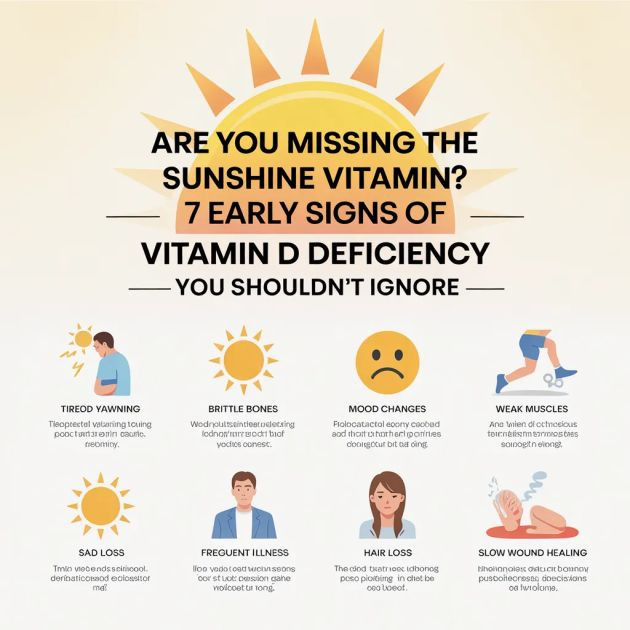
Vitamin D is more than just a nutrient—it’s a key player in your bones, immune system, and mood. Yet millions of people worldwide live with low levels without realizing it. The tricky part? Deficiency often starts quietly, with subtle signs that are easy to dismiss.
Recognizing the early warning signs can make a huge difference for your health.
1. Constant Fatigue
Do you feel drained even after a full night’s sleep? Low vitamin D can affect energy production and muscle function, leaving you unusually tired.
Tip: If fatigue persists despite good sleep and diet, ask your doctor to check your vitamin D levels.
2. Bone and Back Pain
Vitamin D helps your body absorb calcium. Without it, bones can weaken, causing unexplained bone or lower back pain. Over time, deficiency may increase the risk of fractures or osteoporosis.
Tip: Persistent skeletal pain shouldn’t be ignored—especially when combined with other symptoms.
3. Mood Swings and Depression
Vitamin D plays a role in brain function and mood regulation. Low levels have been linked to irritability, low motivation, and even depression.
Tip: If you feel persistently down or moody without a clear reason, vitamin D could be a factor.
4. Frequent Illnesses
Vitamin D is vital for immune health. Deficiency can make you more susceptible to colds, flu, or infections.
Tip: Repeated illness, especially in winter months, warrants a check-up for vitamin D levels.
5. Slow Healing of Cuts and Wounds
Vitamin D supports cell growth and repair. If wounds or bruises take longer than usual to heal, your body might be lacking this essential nutrient.
Tip: Monitor healing patterns and discuss abnormalities with your healthcare provider.
6. Hair Loss
Vitamin D affects hair follicle growth. Deficiency can lead to excessive hair shedding, particularly in women.
Tip: Sudden hair loss is a sign to investigate nutritional or hormonal deficiencies.
7. Muscle Weakness
Low vitamin D can impair muscle strength and coordination, often causing weakness or cramps, especially in the legs.
Tip: Gentle exercise combined with sunlight or vitamin D-rich foods can help—but check levels first.
How to Protect Yourself
- Get Sunlight: 10–30 minutes of sun exposure several times a week can naturally boost vitamin D.
- Eat Vitamin D-Rich Foods: Fatty fish, egg yolks, fortified dairy, and mushrooms are good sources.
- Consider Supplements: Only after consulting a healthcare professional.
- Regular Blood Tests: Early detection prevents long-term complications.
Bottom Line
Vitamin D deficiency is common but often silent. Don’t ignore fatigue, bone pain, mood changes, or recurrent illnesses—they may be your body’s warning signals. Catching deficiency early can strengthen your bones, improve immunity, and lift your mood. Pay attention to your body and prioritize your “sunshine vitamin” for a healthier life.