Doctors Warn: Seven Morning Habits That Are Quietly Damaging Your Health
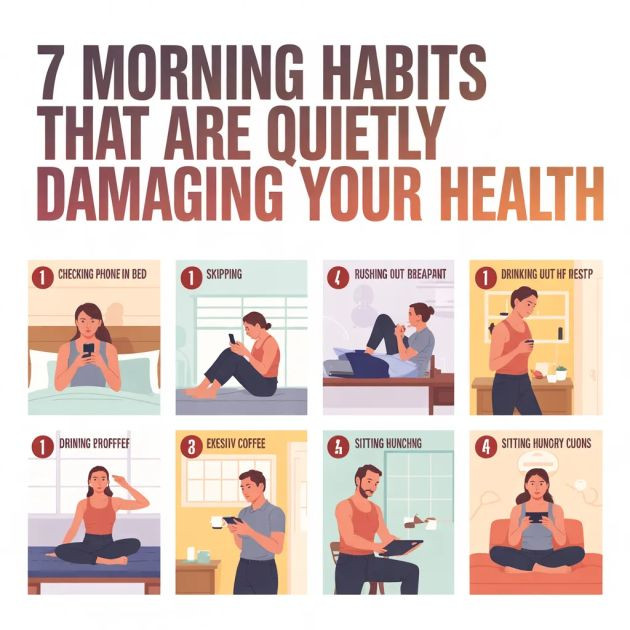
You wake up. You grab your phone. You rush through the morning. It feels normal.
But here’s what most people don’t realize—some of the most common morning routines are slowly hurting your body.
No dramatic symptoms. No instant warning signs. Just small daily habits that build up over time.
Let’s break down the ones that matter most.
1. Checking Your Phone the Second You Wake Up
The alarm goes off, and within seconds you’re scrolling. Emails. Social media. News.
This spikes cortisol—your stress hormone—before your body even has a chance to wake up naturally. Over time, that constant early stress can affect mood, focus, and even blood pressure.
A better move? Give yourself 10–15 minutes before looking at a screen. Let your brain boot up first.
2. Skipping Water First Thing in the Morning
After 6–8 hours of sleep, your body is mildly dehydrated. Yet many people go straight to coffee.
Dehydration in the morning can cause fatigue, headaches, and sluggish digestion. A simple glass of water before anything else helps restart your metabolism and supports your organs.
It’s basic. But it works.
3. Drinking Coffee on an Empty Stomach
Coffee isn’t the enemy. Timing is.
When you drink coffee immediately after waking—especially without food—it can increase stomach acid and irritate your digestive system. It may also amplify anxiety in some people.
Waiting 30–60 minutes after waking allows your natural cortisol levels to stabilize. Your energy will feel smoother, not spiked.
4. Hitting the Snooze Button Repeatedly
That extra five minutes feels harmless. It’s not.
Every time you hit snooze, your brain starts a new sleep cycle it can’t finish. This leads to sleep inertia—grogginess that can last for hours.
If your alarm rings at 7:00, get up at 7:00. Consistency trains your body clock.
5. Skipping Breakfast Completely
Intermittent fasting works for some people. But unintentionally skipping meals because you’re rushing is different.
Going too long without eating can lead to energy crashes, irritability, and overeating later in the day. If you’re not hungry, keep it light—protein, fruit, or yogurt. The goal is stability, not heaviness.
6. Starting the Day Without Natural Light
Your body runs on a circadian rhythm. Morning sunlight tells your brain it’s time to be alert.
Staying indoors under dim lighting can disrupt sleep cycles and reduce daytime energy. Even five minutes near a window or a short walk outside helps regulate your internal clock.
Light is medicine. Most people ignore it.
7. Sitting for the First Two Hours
Many mornings look like this: wake up, sit for breakfast, sit in traffic, sit at a desk.
Long stretches of inactivity first thing in the morning slow circulation and stiffen muscles. Gentle movement—stretching, a short walk, or light mobility exercises—signals your body to fully wake up.
You don’t need an intense workout. Just move.
The Bigger Picture
None of these habits will destroy your health overnight. That’s why they’re easy to ignore.
But health isn’t shaped by one big decision. It’s shaped by small, repeated actions.
Your morning sets the tone for your hormones, energy, digestion, and focus. Adjust a few of these habits, and you’ll likely feel the difference within days.
Bottom Line
Your morning routine shouldn’t drain you before the day even begins.
Drink water. Delay the scrolling. Get light. Move your body.
Small changes. Real impact.