Ricky Martin: The Latin Pop Legend's Journey from Boy Band Heartthrob to Global Superstar
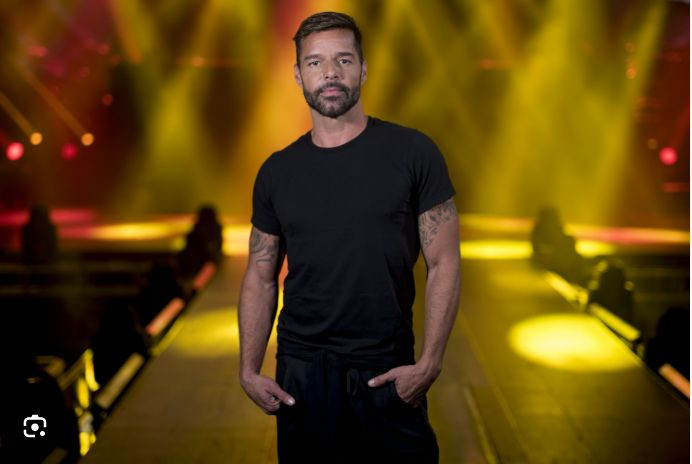
From Puerto Rican Roots to Worldwide Fame: The Ricky Martin Story You Need to Know
Ricky Martin, the charismatic Puerto Rican singer whose infectious energy and chart-topping hits redefined Latin pop, has captivated audiences for decades. Known for his electrifying performances and unapologetic spirit, Martin's story is one of resilience, reinvention, and cultural impact. But beyond the glitz of the stage, who is the man behind the music? Let's dive into the life and legacy of Enrique Martín Morales, better known as Ricky Martin.
Early Days: A Star in the Making
Born on December 24, 1971, in San Juan, Puerto Rico, Ricky Martin grew up in a middle-class family with a passion for music. His father, Enrique Martín Negroni, was a psychologist, and his mother, Nereida Morales, was an accountant. From a young age, Martin showed a flair for performance, influenced by his grandmother's love for boleros and his own fascination with Elvis Presley and Michael Jackson.
At just 12, Martin's life changed forever when he auditioned for the Puerto Rican boy band Menudo. He joined the group in 1984, replacing Ricky Meléndez, and quickly became a fan favorite. Touring relentlessly across Latin America, Europe, and Asia, Menudo sold millions of records and turned its members into teen idols. Martin spent five years with the band, releasing hits like "Claridad" and "Sube a Mi Moto." But by 1989, at 17, he left to pursue a solo career, eager to break free from the boy band's strict rules and explore new horizons.
Solo Breakthrough and "Livin' la Vida Loca"
After Menudo, Martin moved to Mexico City to study acting and hone his craft. He landed roles in telenovelas like "Alcanzar una Estrella" and "Más Allá del Puente," gaining popularity in Latin America. His first solo album, "Ricky Martin" (1991), was a modest success, but it was his 1995 self-titled album that marked his international rise. Produced by Desmond Child, the album featured Spanish-language hits like "Te Extraño, Te Olvido, Te Amo" and "Fuego Contra Fuego."
The real game-changer came in 1998 with "Vuelve," which included the smash single "La Copa de la Vida," the official song for the 1998 FIFA World Cup. But it was the English crossover album "Ricky Martin" (1999) that catapulted him to global stardom. The lead single, "Livin' la Vida Loca," became a phenomenon, topping charts worldwide and earning Martin a Grammy for Best Latin Pop Album. With its infectious salsa rhythms and Martin's magnetic dance moves, the song embodied the late '90s party vibe and introduced Latin pop to mainstream audiences.
Martin's 1999 world tour was a spectacle, drawing massive crowds and solidifying his status as a crossover artist. He collaborated with icons like Madonna and Gloria Estefan, and his performances at the Grammy Awards and Super Bowl halftime show became legendary.
Personal Struggles and Coming Out
Behind the fame, Martin faced personal challenges. In 2000, he publicly came out as gay in a Barbara Walters interview, stating, "I am a fortunate homosexual man." This bold move was groundbreaking in the Latin music world, where LGBTQ+ representation was scarce. Martin had been in a relationship with economist Carlos González Abella since 1993, and they welcomed twin sons, Valentino and Matteo, via surrogacy in 2008.
Martin's openness paved the way for greater acceptance in the industry. He became an advocate for LGBTQ+ rights, speaking at events and supporting organizations like GLAAD. However, his career dipped in the early 2000s with albums like "Sound Loaded" (2000) and "Almas del Silencio" (2003), which didn't replicate his earlier success. He took a break to focus on fatherhood and personal growth.Triumphant Return and Cultural Impact
In 2011, Martin made a stunning comeback with "Musica + Alma + Sexo," a bilingual album that blended pop, salsa, and electronic elements. The lead single, "The Best Thing About Me Is You," featuring Joss Stone, topped Latin charts. He followed up with "A Quien Quiera Escuchar" (2015), which debuted at No. 1 on the Billboard Latin Albums chart and earned him his second Grammy.
Martin's influence extends beyond music. He's starred in Broadway's "Evita" (1996) and films like "The Assassination of Gianni Versace: American Crime Story" (2018), where he portrayed Antonio D'Amico. His philanthropy includes work with UNICEF, where he's an ambassador, and efforts to aid Puerto Rico after Hurricane Maria in 2017.
With over 95 million records sold, Martin is one of the best-selling Latin artists ever. He's won numerous awards, including 11 Grammy nominations and inductions into the Latin Songwriters Hall of Fame. His music has bridged cultures, inspiring artists like Bad Bunny and J Balvin.
Ricky Martin Today: A Legacy of Passion and Perseverance
At 52, Ricky Martin continues to evolve. His latest album, "Play" (2022), features collaborations with artists like Rosalía and Bad Bunny, showcasing his adaptability. He's also ventured into acting, with roles in Netflix's "Special" and upcoming projects.
Martin's journey from a Menudo boy to a global icon is a testament to his talent and courage. He's not just a singer; he's a symbol of self-expression and cultural fusion. As he once sang, "Livin' la Vida Loca" isn't just a song—it's a mantra for living authentically.
Whether you're a longtime fan or discovering him now, Ricky Martin's story reminds us that true stardom comes from staying true to oneself. Catch his next tour or stream his hits; the Latin pop king is far from done.